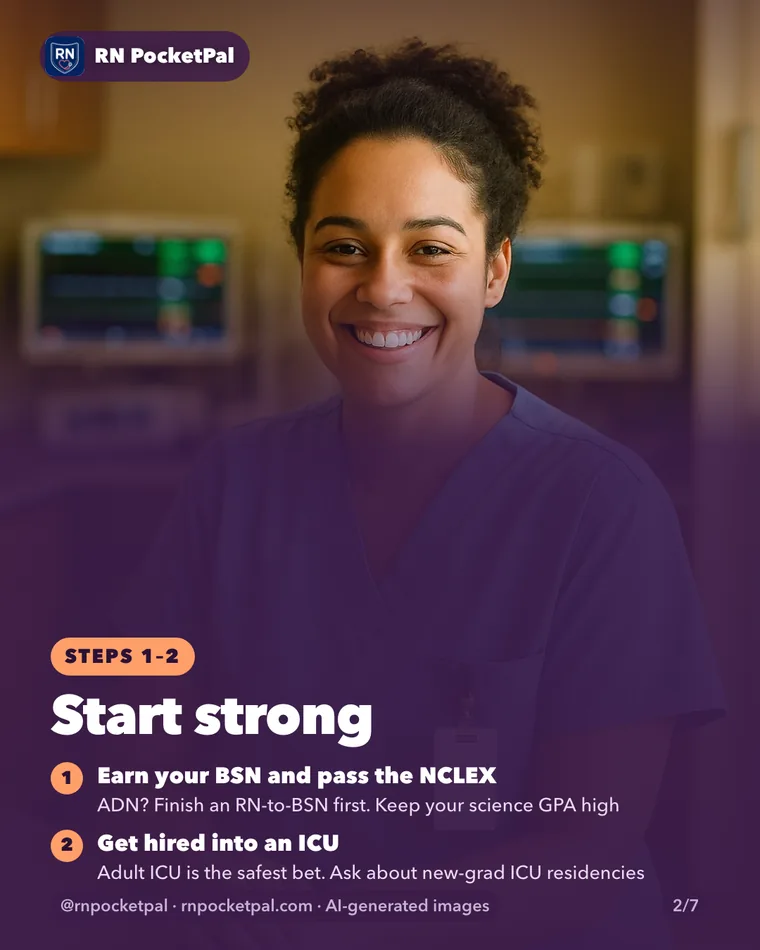
STEPS 1–2
1. Start strong
- Earn your BSN and pass the NCLEXADN? Finish an RN-to-BSN first. Keep your science GPA high
- Get hired into an ICUAdult ICU is the safest bet. Ask about new-grad ICU residencies
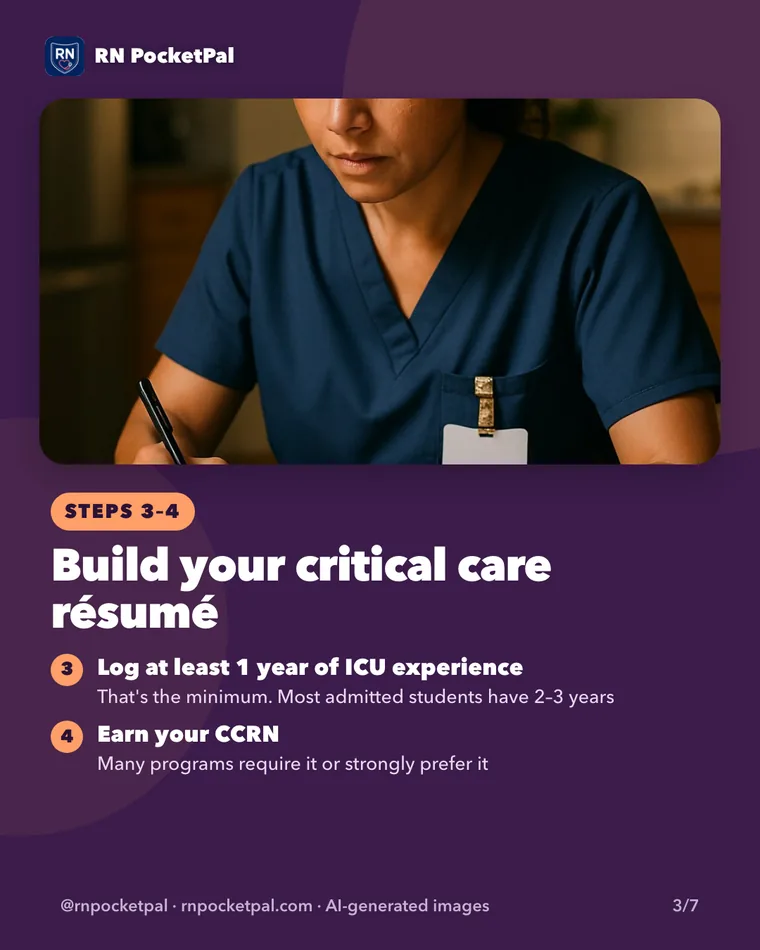
STEPS 3–4
2. Build your critical care résumé
- Log at least 1 year of ICU experienceThat's the minimum. Most admitted students have 2–3 years
- Earn your CCRNMany programs require it or strongly prefer it

STEPS 5–6
3. Apply
- Shadow a CRNAPrograms want proof you know what the job really is
- Apply to a doctoral programDNP or DNAP, about 3 years, full time
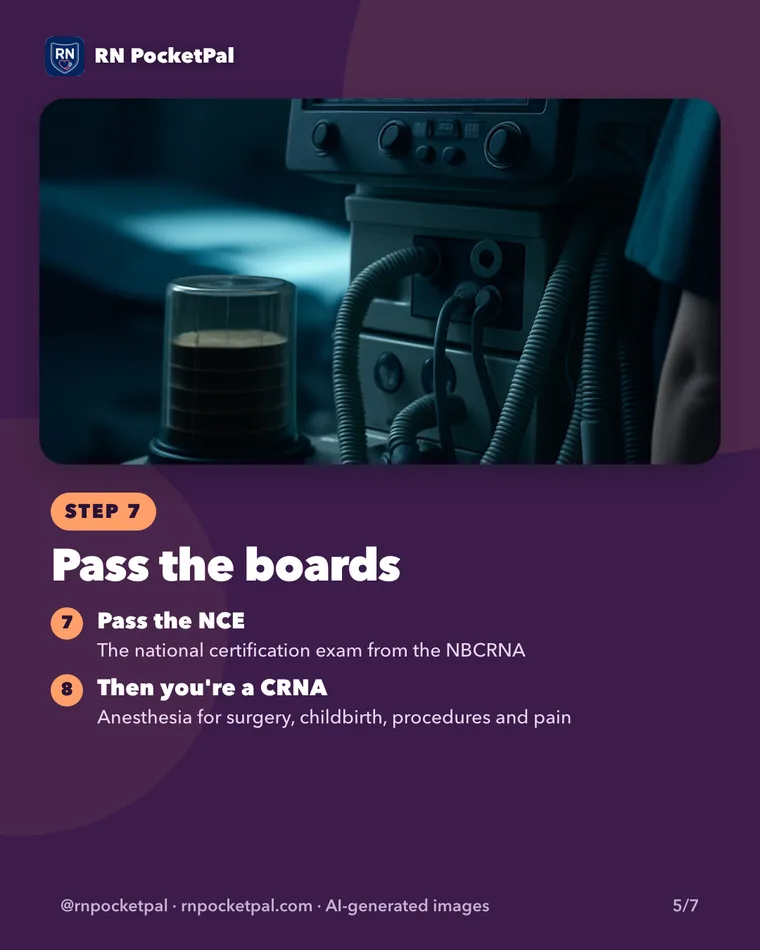
STEP 7
4. Pass the boards
- Pass the NCEThe national certification exam from the NBCRNA
- Then you're a CRNAAnesthesia for surgery, childbirth, procedures and pain
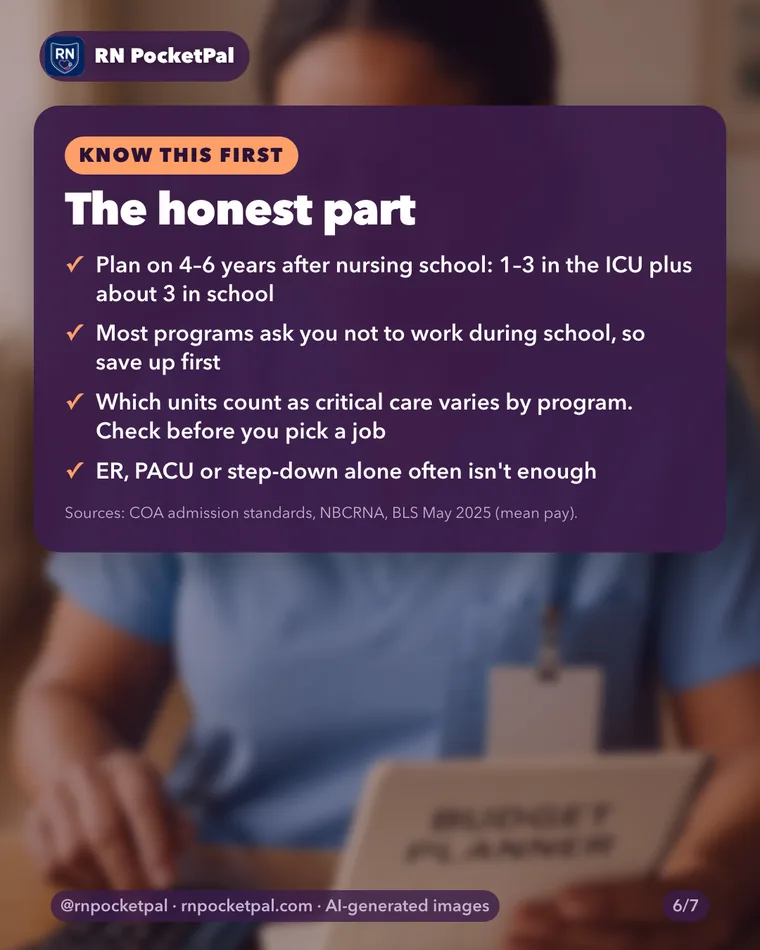
KNOW THIS FIRST
5. The honest part
- Plan on 4–6 years after nursing school: 1–3 in the ICU plus about 3 in school
- Most programs ask you not to work during school, so save up first
- Which units count as critical care varies by program. Check before you pick a job
- ER, PACU or step-down alone often isn't enough
Sources: COA admission standards, NBCRNA, BLS May 2025 (mean pay).
RN PocketPal, the AI for nurses
Study tools, NCLEX practice and shift helpers for nursing students, new grads and CNAs. Free on iOS & Android.