THE REALITY
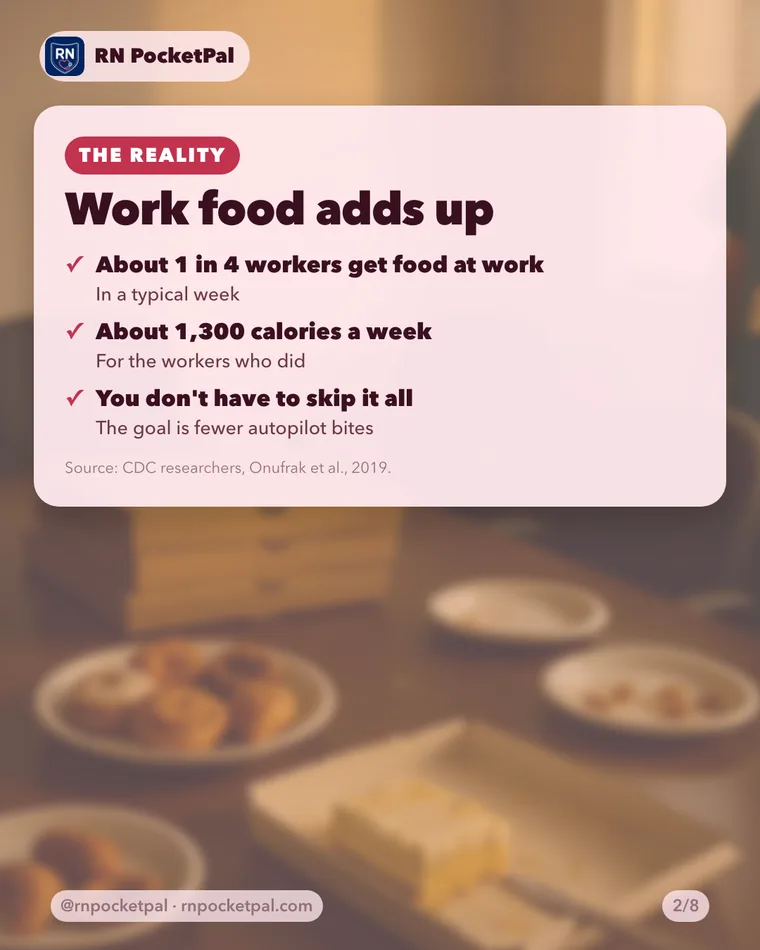
1. Work food adds up
- About 1 in 4 workers get food at workIn a typical week
- About 1,300 calories a weekFor the workers who did
- You don't have to skip it allThe goal is fewer autopilot bites
Source: CDC researchers, Onufrak et al., 2019.
NIGHT SHIFT
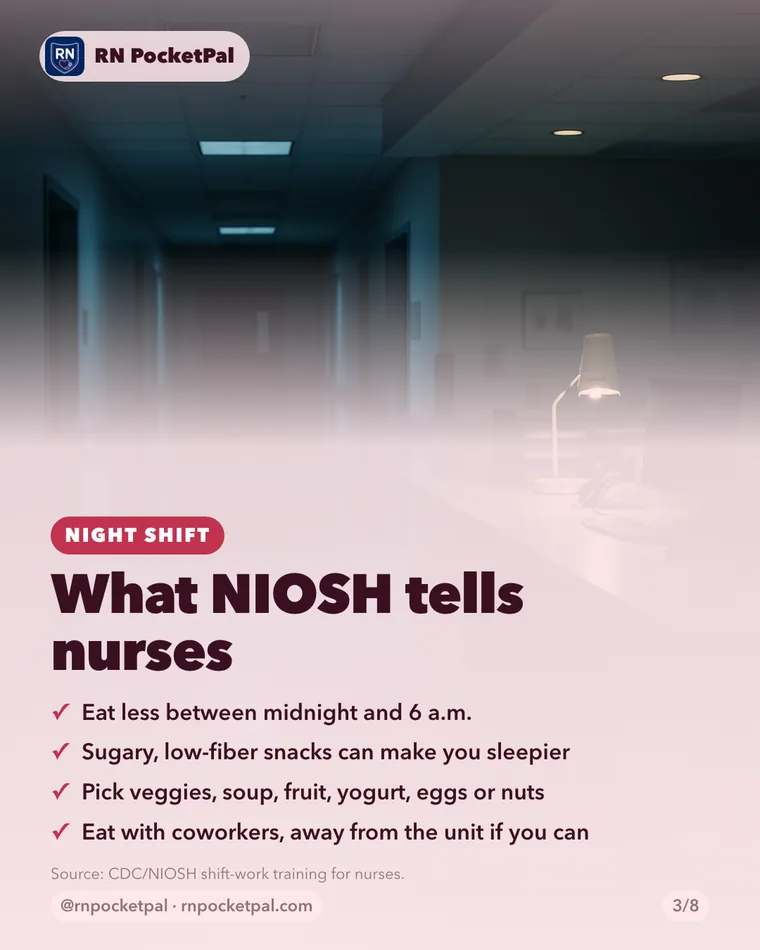
2. What NIOSH tells nurses
- Eat less between midnight and 6 a.m.
- Sugary, low-fiber snacks can make you sleepier
- Pick veggies, soup, fruit, yogurt, eggs or nuts
- Eat with coworkers, away from the unit if you can
Source: CDC/NIOSH shift-work training for nurses.
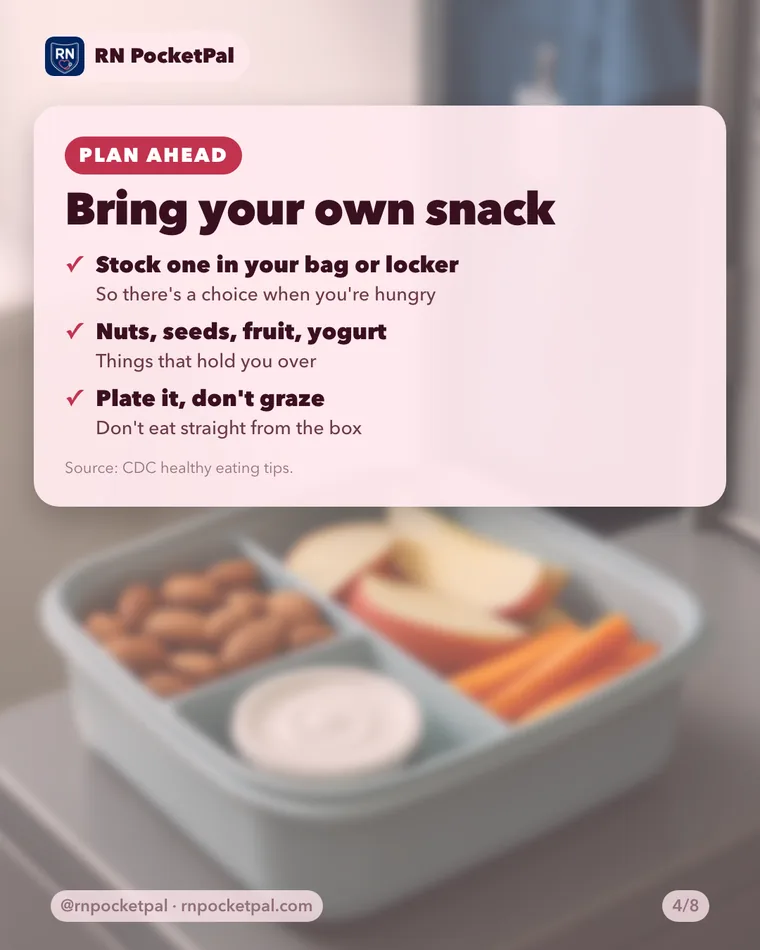
PLAN AHEAD
3. Bring your own snack
- Stock one in your bag or lockerSo there's a choice when you're hungry
- Nuts, seeds, fruit, yogurtThings that hold you over
- Plate it, don't grazeDon't eat straight from the box
Source: CDC healthy eating tips.
SAY NO NICELY
4. Lines that work
- "Thank you! I'll grab one later."
- "I just ate, but these look amazing."
- "Saving mine for after report."
- Or say yesPick the one you really want, and enjoy it
DRINKS COUNT
5. Check what's in the cup
- Water over sugary drinksCarry a refillable bottle
- Caffeine: 400 mg a dayThe level FDA cites for most adults
- Late coffee lingersCaffeine's half-life is 5 to 6 hours
Sources: CDC, FDA, NIOSH.
LABEL MATH
6. Know the sugar numbers
- 50 g of added sugar a dayFDA Daily Value, 2,000-calorie diet
- 10 g of added sugar per meal, maxDietary Guidelines 2025–2030
- Spot it on the label"Sugar", "syrup" or words ending in "-ose"
General wellness info, not medical advice. Ask your doctor about your needs.
RN PocketPal: AI-led education for nurses
Study tools, NCLEX practice and shift helpers for nursing students, new grads and CNAs. Free on iOS & Android.