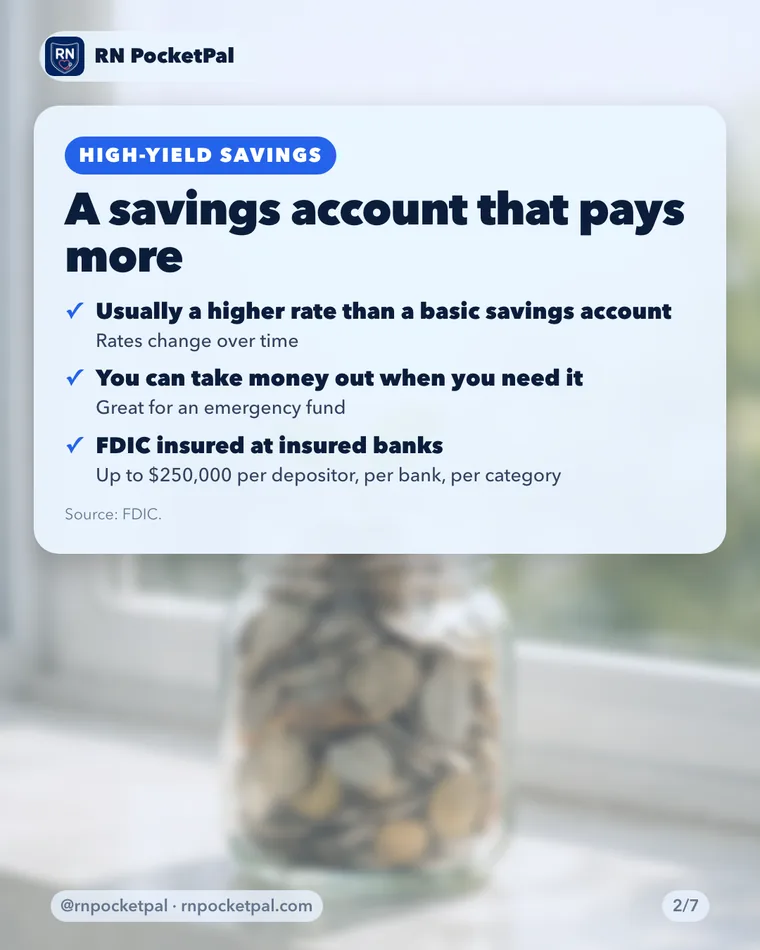
HIGH-YIELD SAVINGS
1. A savings account that pays more
- Usually a higher rate than a basic savings accountRates change over time
- You can take money out when you need itGreat for an emergency fund
- FDIC insured at insured banksUp to $250,000 per depositor, per bank, per category
Source: FDIC.
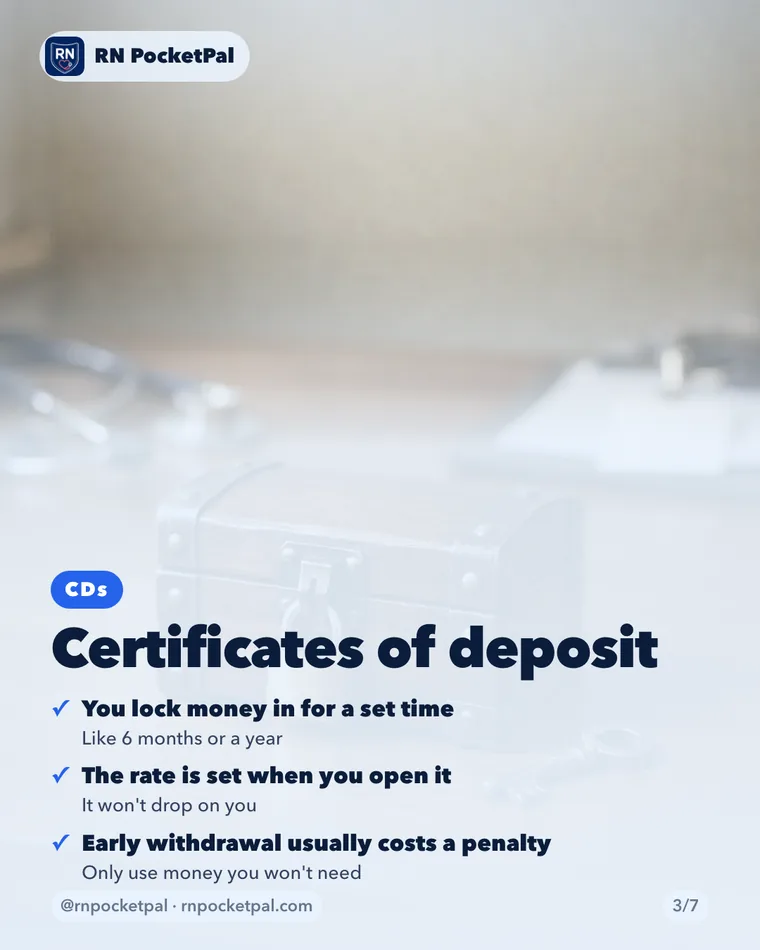
CDs
2. Certificates of deposit
- You lock money in for a set timeLike 6 months or a year
- The rate is set when you open itIt won't drop on you
- Early withdrawal usually costs a penaltyOnly use money you won't need
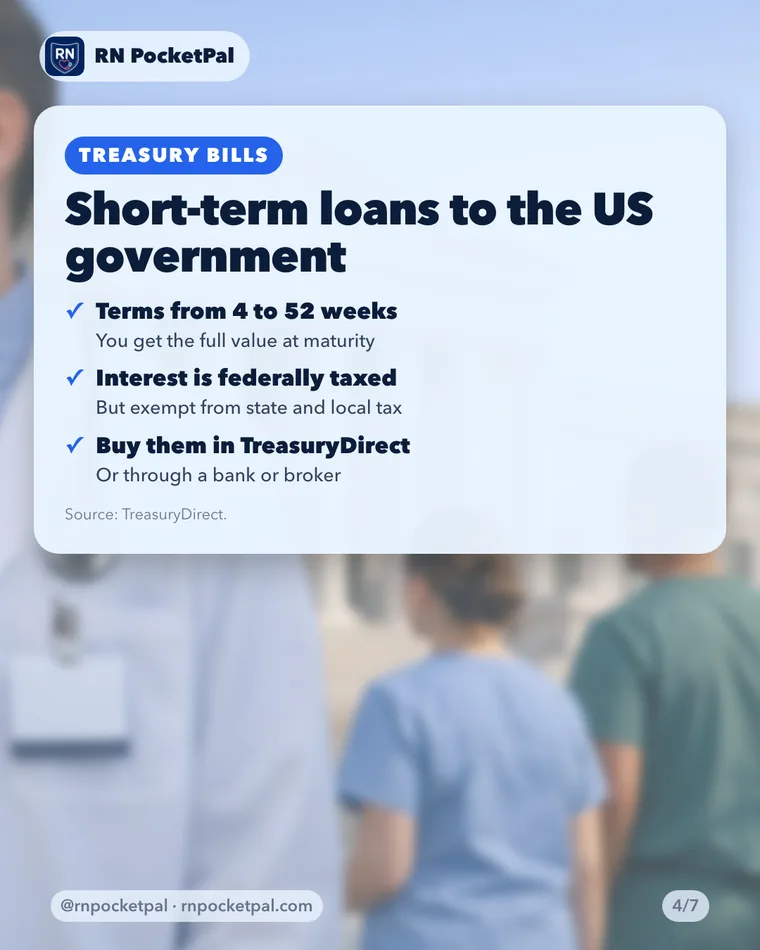
TREASURY BILLS
3. Short-term loans to the US government
- Terms from 4 to 52 weeksYou get the full value at maturity
- Interest is federally taxedBut exempt from state and local tax
- Buy them in TreasuryDirectOr through a bank or broker
Source: TreasuryDirect.

HOW THEY COMPARE
4. Pick by when you need the money
- Need it anytime?High-yield savings
- Won't touch it for months?A CD or a T-bill
- Live in a high-tax state?T-bills skip state tax

QUESTIONS TO ASK
5. Before you move your money
- Is my emergency fund covered first?
- When will I need this money?
- Is my bank FDIC insured?
Educational only, not financial advice. Talk to a fee-only fiduciary or CPA about your situation.
RN PocketPal: AI-led education for nurses
Study tools, NCLEX practice and shift helpers for nursing students, new grads and CNAs. Free on iOS & Android.