

STOCKS
1. A stock = a slice of a company
- You own a small share of the companyAlso called equities
- You can gain if the price risesOr from dividends it pays out
- Prices can also fallStocks can be bumpy
Source: investor.gov (SEC).
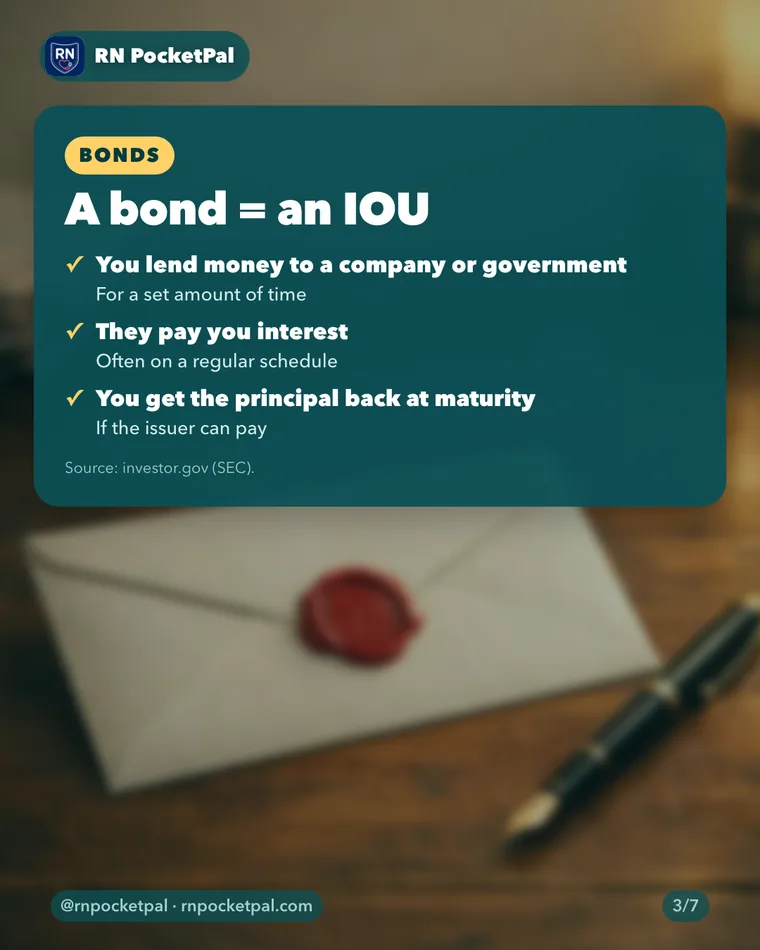
BONDS
2. A bond = an IOU
- You lend money to a company or governmentFor a set amount of time
- They pay you interestOften on a regular schedule
- You get the principal back at maturityIf the issuer can pay
Source: investor.gov (SEC).
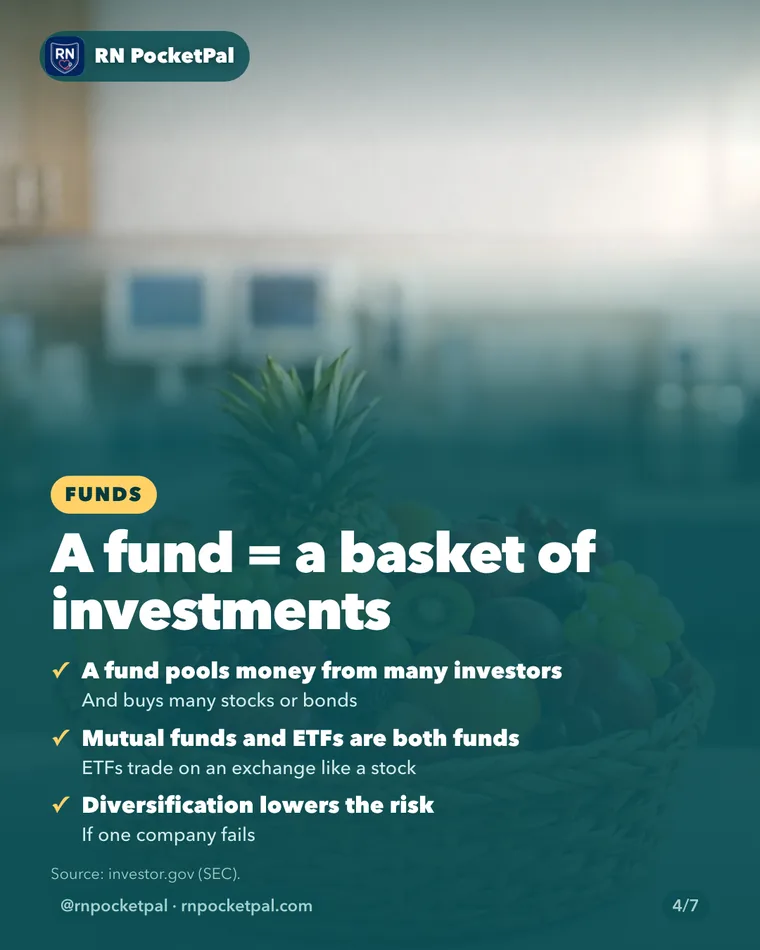
FUNDS
3. A fund = a basket of investments
- A fund pools money from many investorsAnd buys many stocks or bonds
- Mutual funds and ETFs are both fundsETFs trade on an exchange like a stock
- Diversification lowers the riskIf one company fails
Source: investor.gov (SEC).

THE DIFFERENCE
4. How they compare
- Stocks: more ups and downsWith more growth potential over time
- Bonds: usually steadierThey can help balance out stocks
- Funds: many at onceSpread across lots of companies
Source: investor.gov (SEC). All investments carry risk.

QUESTIONS TO ASK
5. Bring these to a fiduciary
- What fees will I pay?
- How much risk fits my timeline?
- Should I start in my work retirement plan?
Educational only, not financial advice. Talk to a fee-only fiduciary or CPA about your situation.
RN PocketPal: AI-led education for nurses
Study tools, NCLEX practice and shift helpers for nursing students, new grads and CNAs. Free on iOS & Android.