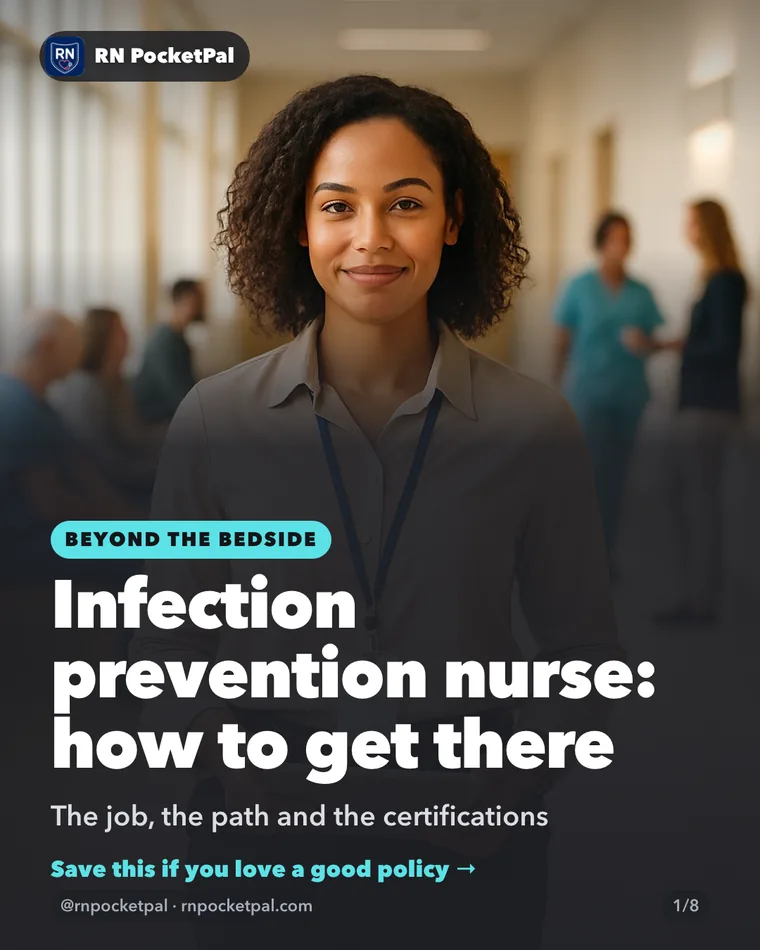
THE JOB
1. What an infection preventionist does
- Tracks infections across the hospitalSpotting patterns before they spread
- Leads the prevention programPolicies, audits and education
- Works with every unitFrom the ER to environmental services
A TYPICAL DAY
2. Less bedside, more big picture
- Reviewing infection data and surveillance reports
- Rounding on units and checking practices
- Teaching staff about prevention
- Working outbreaks with the whole team
THE PATH
3. How nurses usually get in
- Start with strong clinical experienceBedside skills are the foundation
- Join your unit's infection committeeOr volunteer for audits and education
- Apply for an IP or associate roleMany start in an entry-level IP job
CERTIFICATIONS
4. Two credentials from CBIC
- a-IPC: entry levelNo job or education requirements to apply
- CIC: the full credentialFor people responsible for an IP program
- CIC needs IP experience1 year full time, 2 years part time, or 3,000 hours in 3 years
Source: Certification Board of Infection Control and Epidemiology (CBIC). Checked Oct 19, 2026.
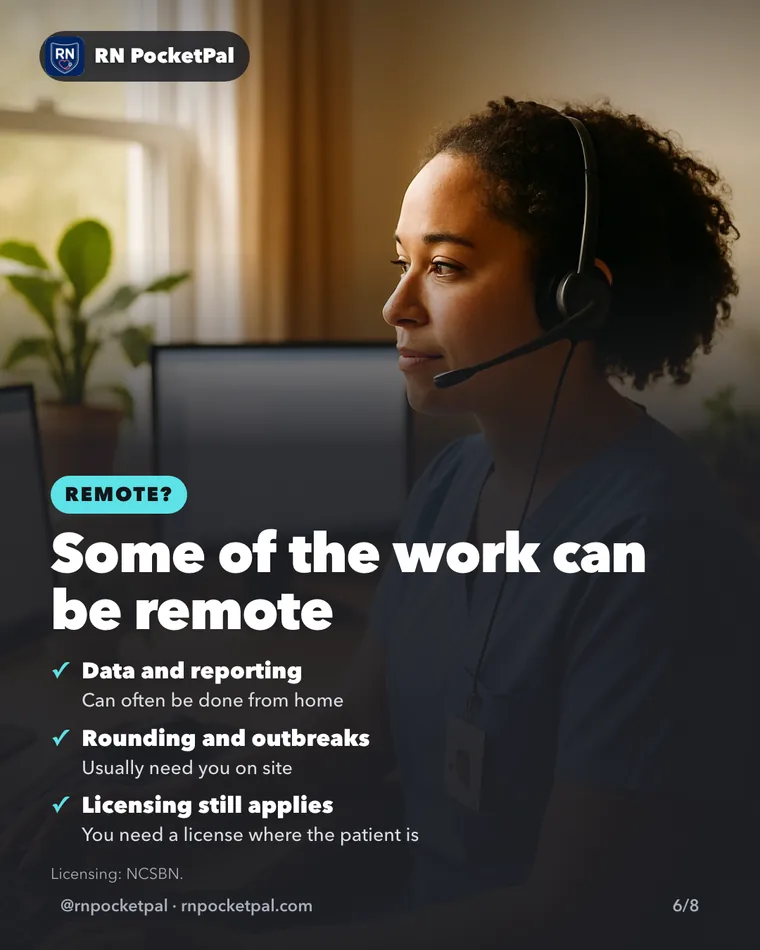
REMOTE?
5. Some of the work can be remote
- Data and reportingCan often be done from home
- Rounding and outbreaksUsually need you on site
- Licensing still appliesYou need a license where the patient is
Licensing: NCSBN.
START NOW
6. Moves you can make this month
- Ask to shadow your infection preventionist
- Volunteer for hand hygiene or line audits
- Read your hospital's infection control policies
- Look into the a-IPC exam
RN PocketPal: AI-led education for nurses
Study tools, NCLEX practice and shift helpers for nursing students, new grads and CNAs. Free on iOS & Android.