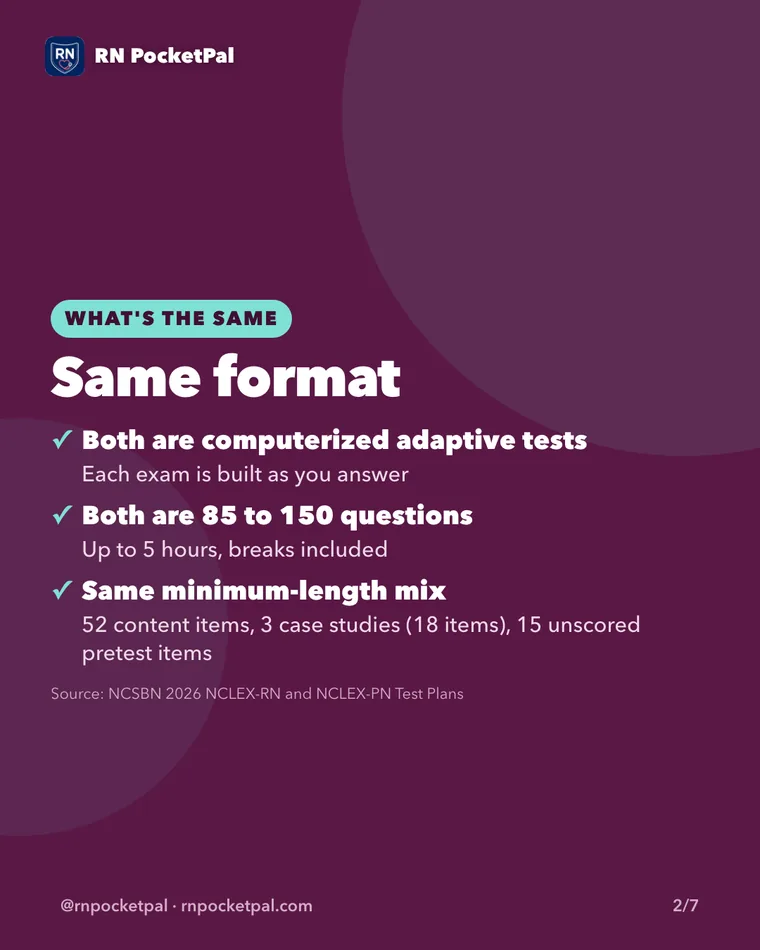
WHAT'S THE SAME
1. Same format
- Both are computerized adaptive testsEach exam is built as you answer
- Both are 85 to 150 questionsUp to 5 hours, breaks included
- Same minimum-length mix52 content items, 3 case studies (18 items), 15 unscored pretest items
Source: NCSBN 2026 NCLEX-RN and NCLEX-PN Test Plans
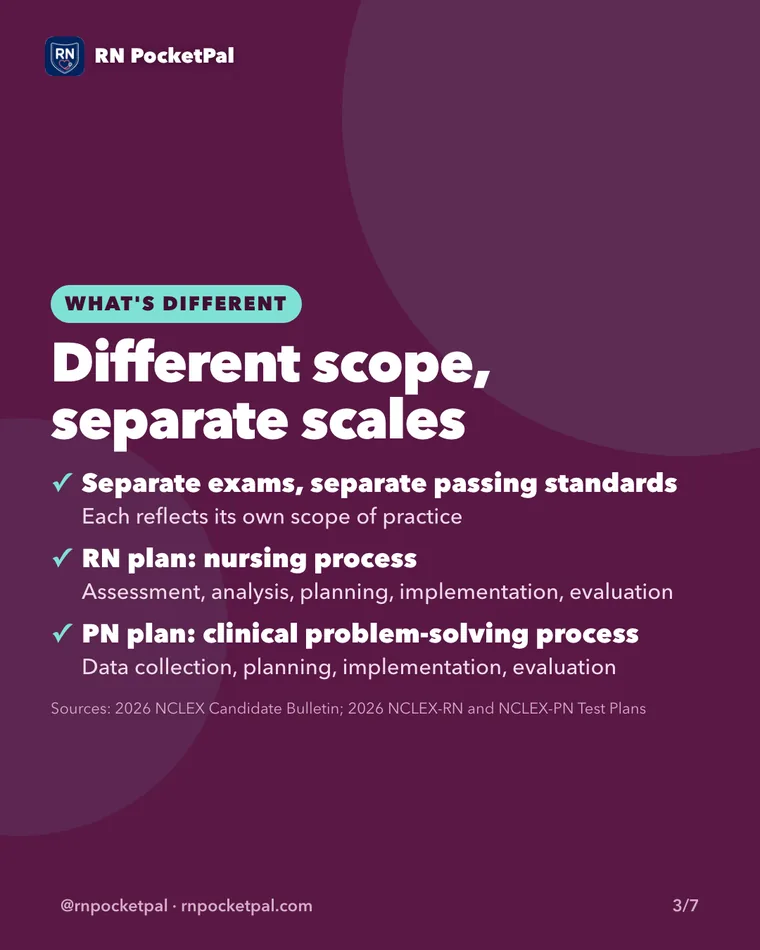
WHAT'S DIFFERENT
2. Different scope, separate scales
- Separate exams, separate passing standardsEach reflects its own scope of practice
- RN plan: nursing processAssessment, analysis, planning, implementation, evaluation
- PN plan: clinical problem-solving processData collection, planning, implementation, evaluation
Sources: 2026 NCLEX Candidate Bulletin; 2026 NCLEX-RN and NCLEX-PN Test Plans
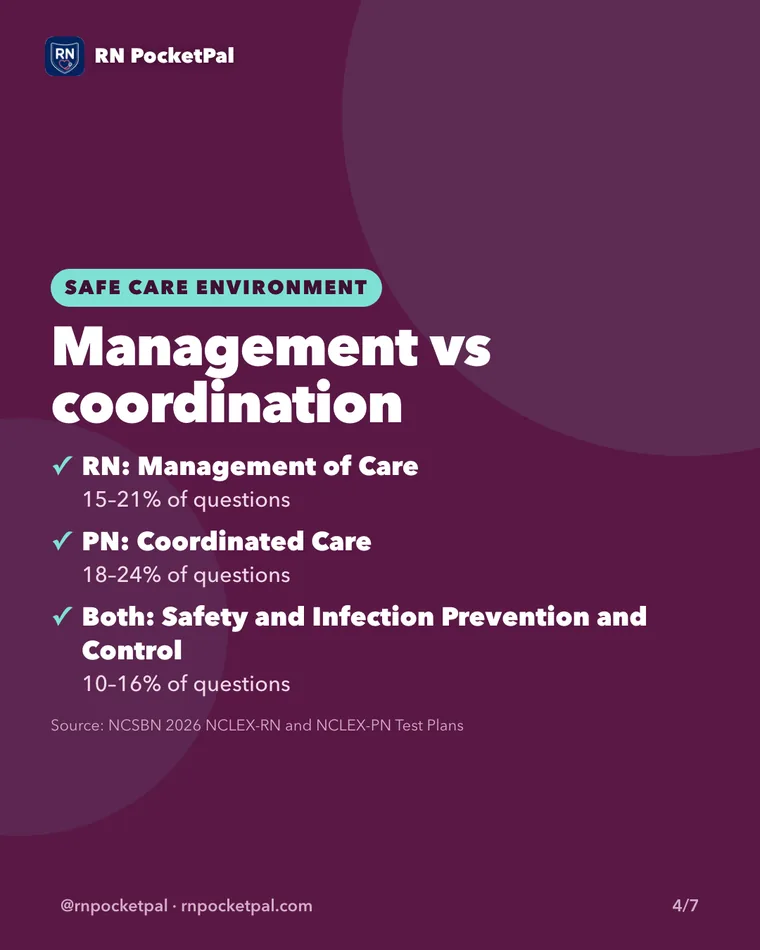
SAFE CARE ENVIRONMENT
3. Management vs coordination
- RN: Management of Care15–21% of questions
- PN: Coordinated Care18–24% of questions
- Both: Safety and Infection Prevention and Control10–16% of questions
Source: NCSBN 2026 NCLEX-RN and NCLEX-PN Test Plans
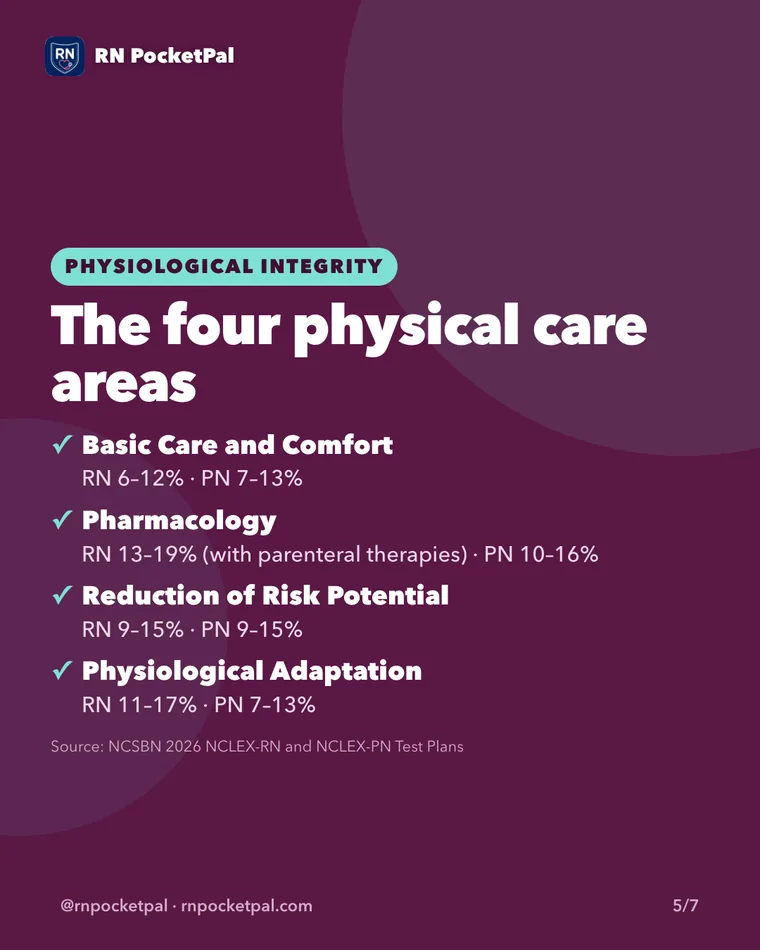
PHYSIOLOGICAL INTEGRITY
4. The four physical care areas
- Basic Care and ComfortRN 6–12% · PN 7–13%
- PharmacologyRN 13–19% (with parenteral therapies) · PN 10–16%
- Reduction of Risk PotentialRN 9–15% · PN 9–15%
- Physiological AdaptationRN 11–17% · PN 7–13%
Source: NCSBN 2026 NCLEX-RN and NCLEX-PN Test Plans
THE OTHER TWO
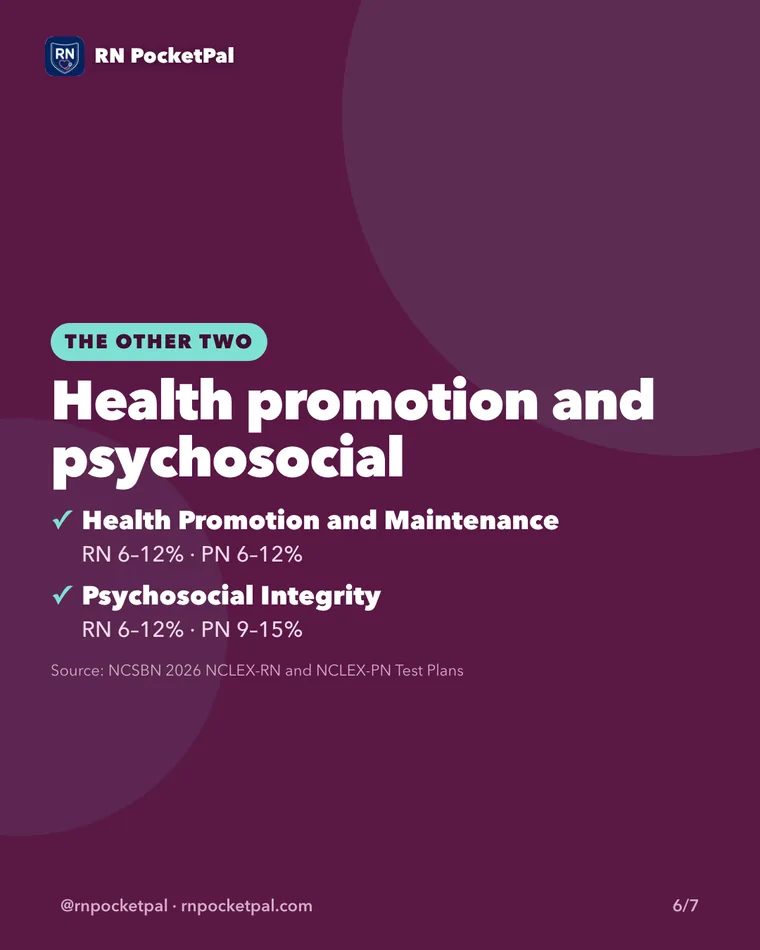
5. Health promotion and psychosocial
- Health Promotion and MaintenanceRN 6–12% · PN 6–12%
- Psychosocial IntegrityRN 6–12% · PN 9–15%
Source: NCSBN 2026 NCLEX-RN and NCLEX-PN Test Plans
STUDY TIP
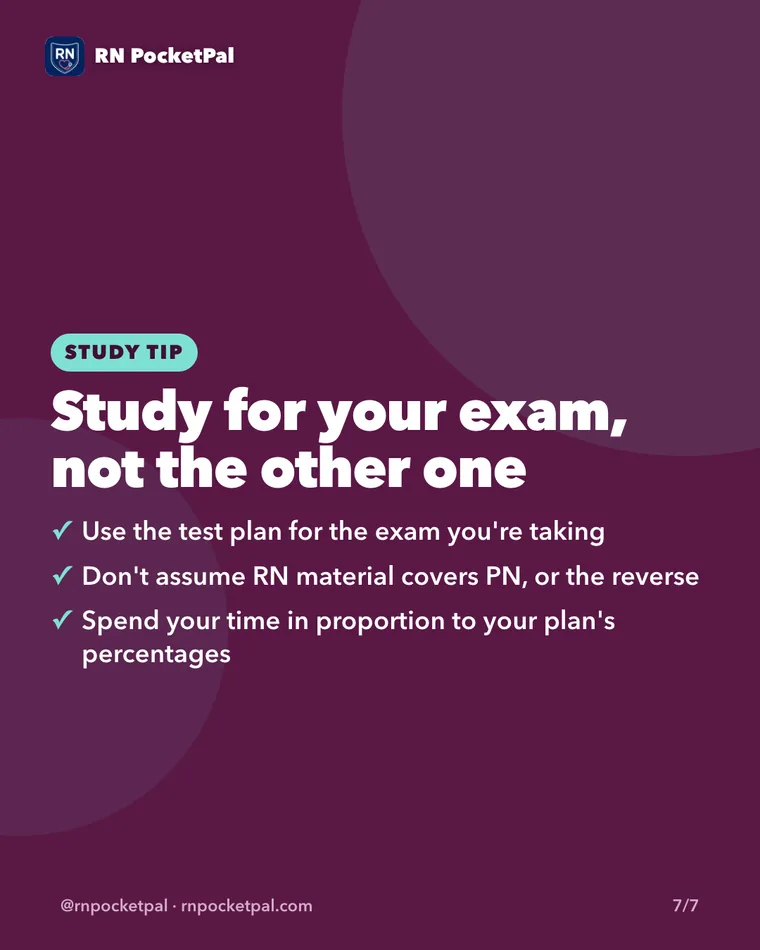
6. Study for your exam, not the other one
- Use the test plan for the exam you're taking
- Don't assume RN material covers PN, or the reverse
- Spend your time in proportion to your plan's percentages
RN PocketPal: AI-led education for nurses
Study tools, NCLEX practice and shift helpers for nursing students, new grads and CNAs. Free on iOS & Android.