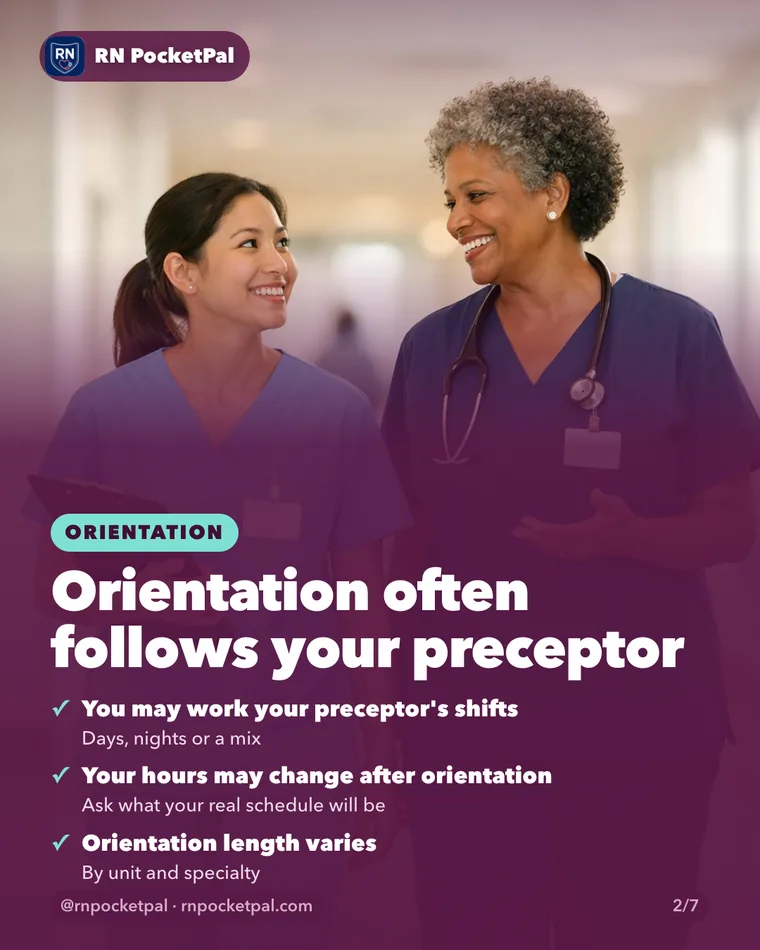
ORIENTATION
1. Orientation often follows your preceptor
- You may work your preceptor's shiftsDays, nights or a mix
- Your hours may change after orientationAsk what your real schedule will be
- Orientation length variesBy unit and specialty
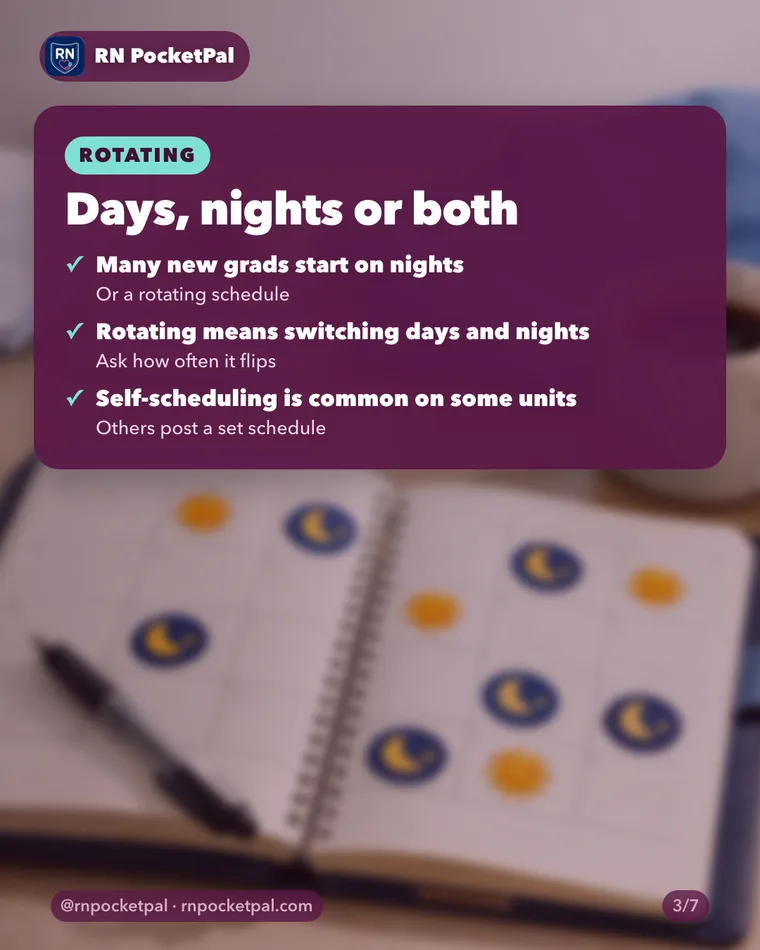
ROTATING
2. Days, nights or both
- Many new grads start on nightsOr a rotating schedule
- Rotating means switching days and nightsAsk how often it flips
- Self-scheduling is common on some unitsOthers post a set schedule

WEEKENDS & HOLIDAYS
3. Expect to share the weekends
- Most units rotate weekendsAsk how many per schedule
- Holidays usually rotate tooSome units track who worked which
- Low seniority can mean fewer choicesThat changes with time
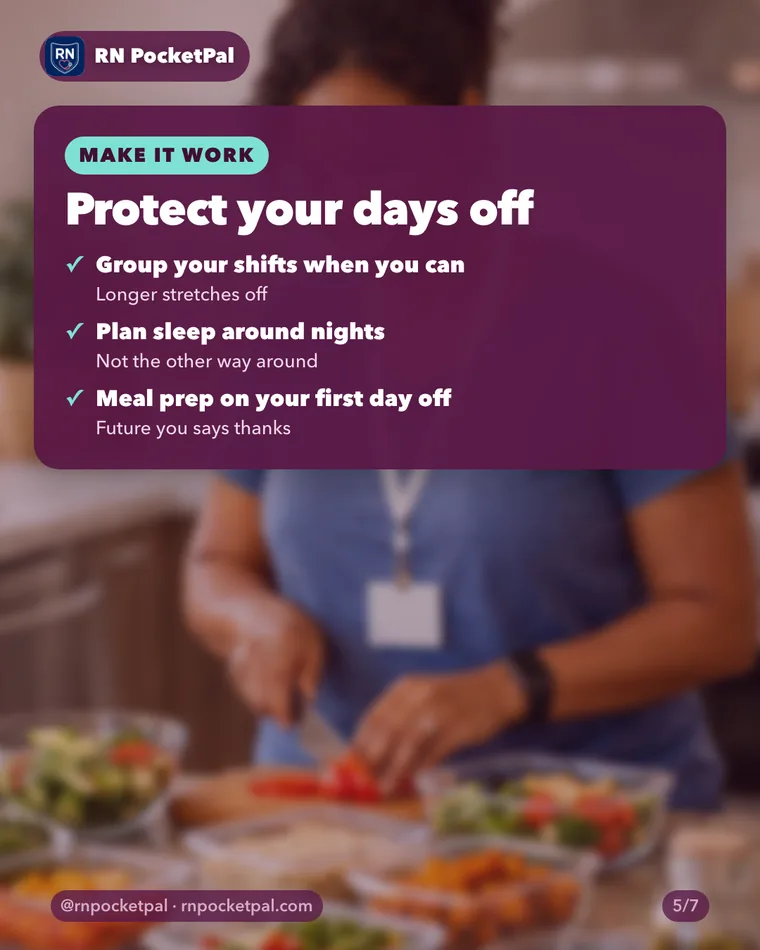
MAKE IT WORK
4. Protect your days off
- Group your shifts when you canLonger stretches off
- Plan sleep around nightsNot the other way around
- Meal prep on your first day offFuture you says thanks

ASK YOUR MANAGER
5. Questions worth asking
- How is the schedule made, and when is it posted?
- How do requests and shift swaps work?
- What's the weekend and holiday rotation?
- Check your unit's policy or union contract
RN PocketPal: AI-led education for nurses
Study tools, NCLEX practice and shift helpers for nursing students, new grads and CNAs. Free on iOS & Android.