THE STANDARD
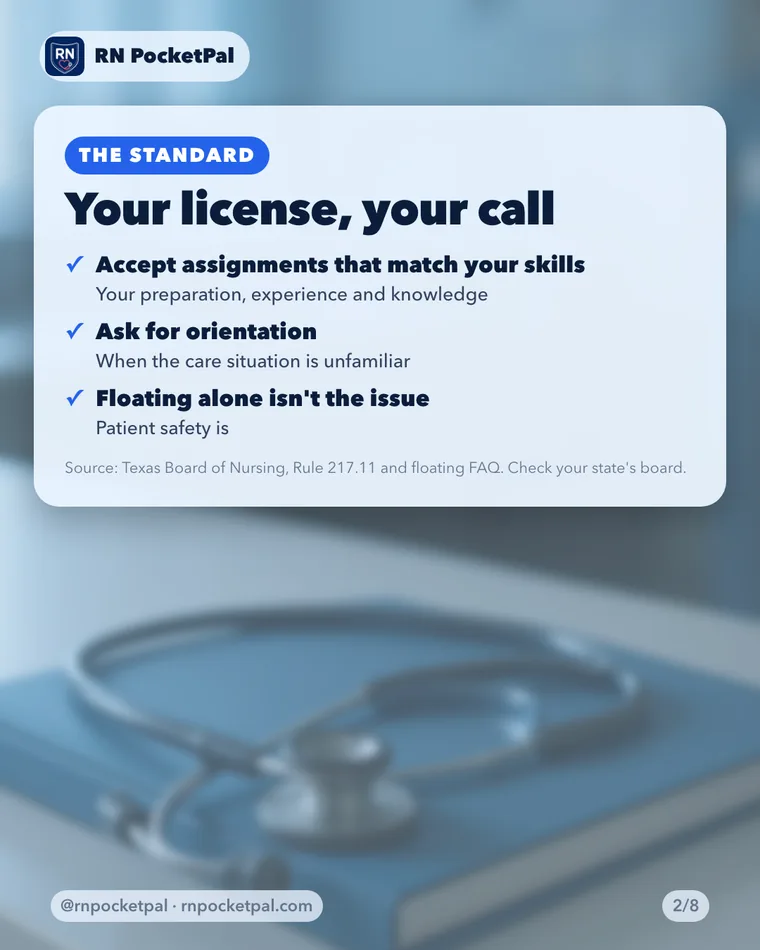
1. Your license, your call
- Accept assignments that match your skillsYour preparation, experience and knowledge
- Ask for orientationWhen the care situation is unfamiliar
- Floating alone isn't the issuePatient safety is
Source: Texas Board of Nursing, Rule 217.11 and floating FAQ. Check your state's board.
WHAT YOU CAN SAY
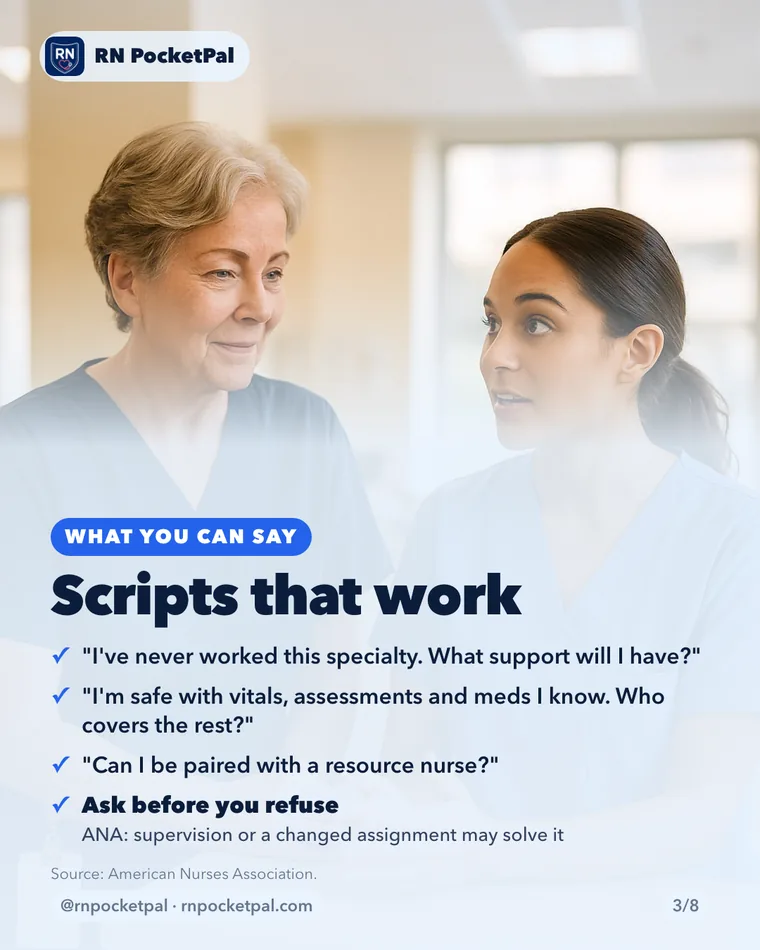
2. Scripts that work
- "I've never worked this specialty. What support will I have?"
- "I'm safe with vitals, assessments and meds I know. Who covers the rest?"
- "Can I be paired with a resource nurse?"
- Ask before you refuseANA: supervision or a changed assignment may solve it
Source: American Nurses Association.
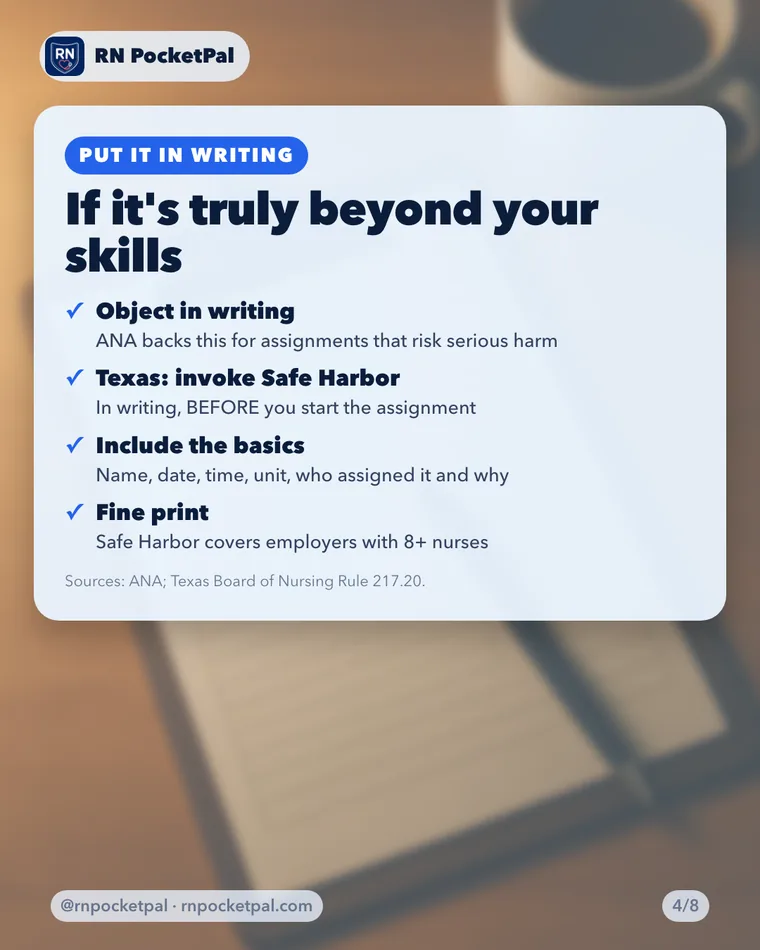
PUT IT IN WRITING
3. If it's truly beyond your skills
- Object in writingANA backs this for assignments that risk serious harm
- Texas: invoke Safe HarborIn writing, BEFORE you start the assignment
- Include the basicsName, date, time, unit, who assigned it and why
- Fine printSafe Harbor covers employers with 8+ nurses
Sources: ANA; Texas Board of Nursing Rule 217.20.
CALIFORNIA
4. Some states put it on the hospital
- Hospitals must confirm competenceBefore assigning you to a unit
- Orientation comes firstIncluding staff floated from other units
Source: Cal. Code of Regulations, Title 22, 70214 and 70217.
SPEAK UP TOGETHER
5. You have backup
- Raising safety concerns as a group is protectedUnder federal labor law, union or not
- Supervisors aren't coveredThe law excludes them
- In a union?Call your rep and check your contract's float rules
Source: National Labor Relations Board.
NEVER WALK OFF
6. Speak up before report, not after
- Raise concerns before you acceptOnce you take report, the patients are yours
- Leaving without handoffCan be patient abandonment
- Leaving any assignment?Tell your supervisor first
Educational only, not legal advice. Laws vary by state; talk to an employment lawyer, your union rep or your state labor agency.
RN PocketPal: AI-led education for nurses
Study tools, NCLEX practice and shift helpers for nursing students, new grads and CNAs. Free on iOS & Android.