WHO QUALIFIES
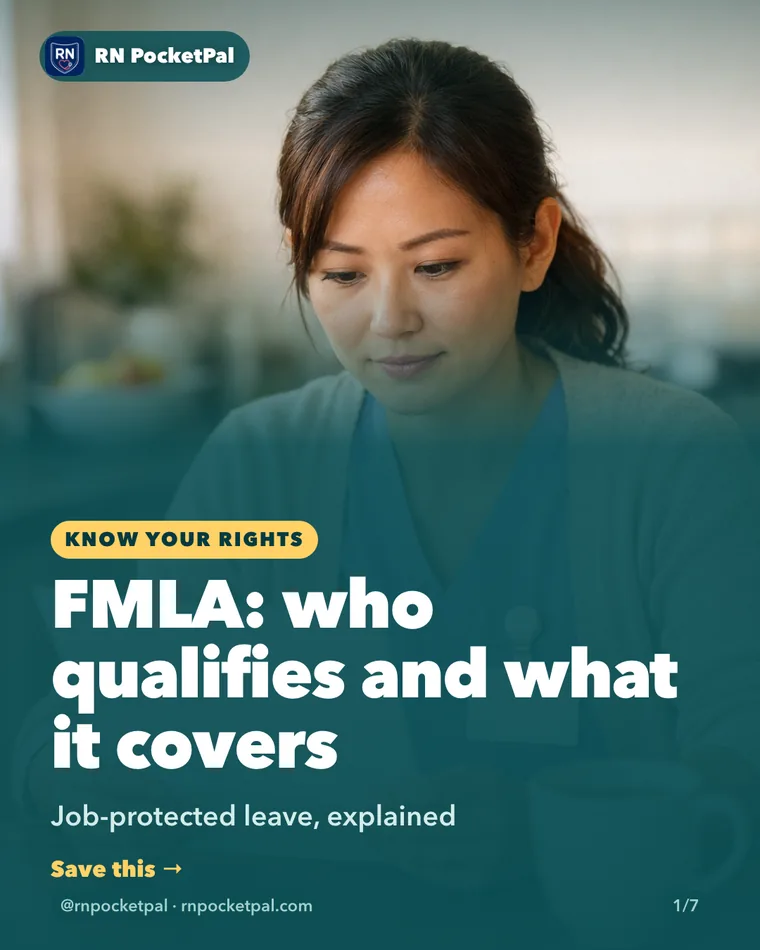
1. You're likely eligible if you...
- Worked for your employer 12 monthsThey don't have to be in a row
- Worked 1,250 hours in the last 12 monthsBefore your leave starts
- Work where there are 50+ employees within 75 milesAsk HR if your site meets it
Source: U.S. Department of Labor.
WHY YOU CAN TAKE IT
2. Reasons FMLA covers
- Your own serious health conditionIncluding recovery
- Birth, adoption or foster placementTo bond with your child
- Caring for a spouse, child or parentWith a serious health condition
Source: U.S. Department of Labor.
HOW MUCH
3. Up to 12 workweeks a year
- Up to 12 workweeks in a 12-month periodFor most reasons
- Up to 26 workweeks for military caregiversCaring for a servicemember
- Sometimes taken in blocks or reduced hoursAsk HR how it works
Source: U.S. Department of Labor.
WHAT'S PROTECTED
4. Unpaid, but protected
- FMLA leave is unpaidPTO or state programs may help
- Your job is protectedSame or an equivalent job
- Your group health benefits continueOn the same terms
Source: U.S. Department of Labor.
YOUR NEXT STEPS
5. Before you need it
- Ask HR for your employer's FMLA policy
- Give notice as early as you can
- Ask if your state has paid leave
Not legal advice. Talk to HR, your union rep or an employment lawyer. State laws may give you more.
RN PocketPal: AI-led education for nurses
Study tools, NCLEX practice and shift helpers for nursing students, new grads and CNAs. Free on iOS & Android.